Tips and walkthroughs
MetaMask login is the self-custody access point for MetaMask's everything wallet
Key takeaway: Self-custody crypto wallet access flow for using dapps, buying ETH, SOL and BTC, with MetaMask Swaps across major networks.
Metamask login is the unlock flow that opens MetaMask, a self-custody crypto wallet for Ethereum, Solana, Bitcoin buying, token swaps, dapp connections, NFTs, onchain payments, and advanced features such as perps and prediction markets. It matters because the wallet holds private keys locally, so access starts with your extension, mobile app, hardware wallet, or recovery setup rather than a normal website account.
Notably, MetaMask has grown from an Ethereum browser extension into a multi-network wallet used for everyday onchain activity. The same interface now brings together assets, networks, swaps, fiat onramps, tokenized real-world assets, NFT activity, developer tools, and security alerts. That breadth explains why many searches for a login page are really searches for the correct way to open the wallet, avoid impostor prompts, and connect safely to Web3 apps.
The unlock screen, extension, and mobile app
The normal Metamask login experience begins inside the official browser extension or mobile app. A returning user unlocks the local wallet with the password set on that device. That password opens the encrypted vault on the computer or phone; the Secret Recovery Phrase remains the master backup for restoring the wallet elsewhere. A hardware wallet connection adds another signing device, which places transaction approval on the separate device screen.
This flow feels familiar, but it carries more responsibility than a traditional web account. A password reset email does not recover a wallet. Recovery depends on the Secret Recovery Phrase or the connected hardware wallet. The safest pattern is simple: unlock MetaMask only through the installed app or extension, then connect to a dapp from that wallet interface when the site asks for permission.
Buying BTC, ETH, SOL, and stablecoins from the wallet
MetaMask's buy experience turns cash into crypto through integrated providers, so users fund a wallet without first moving assets from a centralized exchange. The official site highlights BTC, ETH, SOL, and other supported assets, with payment methods and availability shaped by location and provider rules. Once purchased, assets appear in the wallet dashboard alongside existing tokens and network balances.
For a new user, Metamask login is therefore the entry point to holding assets directly before using them. ETH pays gas on Ethereum and many Layer 2 networks, SOL pays fees on Solana, and stablecoins such as USDC serve as common payment or trading assets. The wallet also supports viewing and managing assets across networks, which reduces the chance of losing track of tokens after a bridge, swap, or dapp interaction.
MetaMask Swaps and aggregated routes
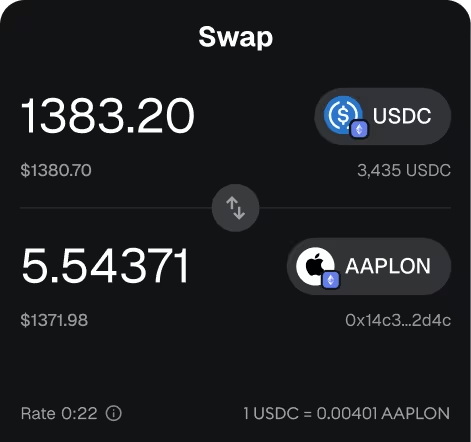
Typically, MetaMask Swaps lets users exchange tokens from inside the wallet by checking liquidity sources and returning a quoted route. The user reviews the token pair, network, rate, estimated network fee, and approval request before signing. Swapping inside the wallet keeps the flow close to the account that signs the transaction, which is especially useful when moving between ETH, USDC, DeFi tokens, and assets on major networks.
Costs still come from the mechanics of the chain and the trade. Network gas pays validators or sequencers, while swap pricing reflects liquidity, slippage settings, and aggregator routing. Metamask login does not remove those economics; it gives the user a single place to review them before committing a transaction. For volatile assets or thin liquidity, the quote screen deserves a slower look because price movement changes the final amount received.
Dapp connections, approvals, and signatures
Connecting a wallet to a dapp shares public account information and lets the site request signatures. Common requests include connecting an address, approving token spending, minting an NFT, placing a trade, claiming a reward, or signing a message. The wallet shows the request, the network, and the account so the user can accept or reject it.
The highest-risk moments involve token approvals and unfamiliar message signatures. An approval grants a smart contract permission to move a specific token up to a stated limit. A signature proves account control or authorizes an action. MetaMask includes security alerts, Wallet Guard, frontrun protection, and Transaction Shield features to make dangerous prompts easier to spot, but the final signature still belongs to the wallet holder.
Perps, Predict, RWAs, and onchain trading features
The newer MetaMask experience reaches beyond basic holding and swapping. Its official product surface includes Perps for long or short exposure with leverage up to 50x, Predict for trading outcomes tied to real-world events, and RWAs for tokenized stocks and ETFs. These features bring more market activity into the same wallet environment that already handles assets, networks, and signatures.
That expansion makes Metamask login a gateway to very different risk profiles. Buying ETH for gas, swapping USDC, collecting NFTs, and trading leveraged perpetuals are not the same kind of action. The interface unifies access, while each product still has its own mechanics, fees, liquidation rules, oracle behavior, and regional availability. Treat the transaction preview as the source of truth for what the wallet is about to sign.
NFTs, games, and wallet-based identity
NFT activity remains one of the places where MetaMask feels natural. A wallet address acts as the identity that browses, mints, lists, buys, and transfers collectibles. Games and onchain apps use the same address to recognize items, balances, achievements, and permissions. The user signs from the wallet, then the dapp reads the public address and relevant contracts.
This is also where phishing pages copy legitimate experiences most aggressively. A fake mint page asks for a rushed signature or a broad approval, then drains tokens or NFTs. A genuine Metamask login flow never requires typing the Secret Recovery Phrase into a dapp page. That phrase belongs only in wallet recovery, and entering it into a website hands over control of every account derived from it.
Security controls inside the MetaMask experience
In most cases, MetaMask emphasizes a privacy-first model where the user sets data terms and keeps control of accounts. The wallet also presents alerts, monitors threats in real time, and points users toward transaction details before a signature. Regular audits and years of transaction history support the product's security posture, but daily safety comes from reviewing prompts before signing.
A practical setup includes a few habits that fit the way the wallet works:
- Install MetaMask from the official app store or extension listing.
- Keep the Secret Recovery Phrase offline and separate from screenshots.
- Use a hardware wallet for larger balances or long-term holdings.
- Read token approvals before granting unlimited spending.
- Disconnect old dapps and revoke stale approvals when they no longer serve a purpose.

MetaMask Connect and developer tools
The wallet also matters to builders. MetaMask Connect helps dapps integrate wallet connection flows, while Web3 Services, Dashboard, API keys, endpoints, Smart Accounts Kit, Embedded Wallets, and Snaps support application development. Snaps extend wallet functionality, and smart account tooling helps teams create smoother onboarding and account experiences.
These developer products explain why users see MetaMask across DeFi, NFT marketplaces, games, payment apps, and infrastructure dashboards. A dapp that supports the wallet asks the user to connect, then requests signatures only when an onchain action or account proof is needed. Metamask login, in that setting, becomes the bridge between a public address and the application using it.
Choosing MetaMask alongside other wallets
For context, MetaMask is strongest for users who want broad Ethereum ecosystem coverage, multi-network dapp access, integrated swaps, mobile and extension support, and a long-standing developer footprint. Phantom has a deep Solana heritage, Coinbase Wallet connects closely with Coinbase's retail ecosystem, and Rabby focuses on transaction simulation for EVM power users. Many experienced users keep more than one wallet because different apps and chains support different flows.
The right choice follows the activity. Someone focused on Ethereum Layer 2 networks, DeFi approvals, NFTs, and browser-based dapps gets strong coverage from MetaMask. A user living mostly on Solana compares mobile experience, token support, and app compatibility more closely. For most people searching Metamask login, the immediate goal is narrower: open the real wallet, confirm the right account and network, and sign only the transaction they actually intend to make.
Helpful answers about Metamask login
- What does a MetaMask password unlock on my device?
- The MetaMask password unlocks the encrypted wallet vault stored on that specific browser profile or phone. It is a local access password, not a universal account credential. If the device is lost or the extension is removed, recovery depends on the Secret Recovery Phrase or the connected hardware wallet setup, not on an email reset flow.
- How long does a MetaMask transaction take after signing?
- Transaction time depends on the network handling it. Ethereum mainnet settlement follows current block activity and gas pricing, while Layer 2 networks and Solana process many routine transfers faster. MetaMask shows pending status after signing, and the final confirmation appears once the network includes the transaction and the wallet reads the updated state.
- Do I need ETH before using MetaMask Swaps?
- You need the native gas token for the network where the swap happens. On Ethereum, that means ETH. On Polygon, the current gas token is POL. On Solana, fees use SOL. The token being swapped is separate from the token used to pay network fees, so a wallet needs enough gas even when trading stablecoins or other assets.
- Can I use MetaMask with a hardware wallet?
- Yes. MetaMask supports connecting hardware wallets so the extension acts as the interface while the hardware device protects signing. The wallet displays balances and transaction prompts, but final approval happens on the hardware device. This setup is useful for larger balances because private key control stays isolated from the browser environment.
- What happens if I connect MetaMask to the wrong dapp?
- A simple connection shares your public address and lets the site request actions, but it does not automatically move funds. Risk rises when you sign messages, approve token spending, or confirm transactions. If a connection feels suspicious, disconnect the site from MetaMask and review token approvals for the affected account and network.
- Which networks are most common for MetaMask users?
- Ethereum remains the core network for MetaMask, and many users also add Layer 2 networks such as Arbitrum, Optimism, Base, and Polygon-compatible environments. The current MetaMask product also emphasizes broader asset access, including Solana support in its wallet experience. Network choice matters because gas tokens, addresses, tokens, and dapp compatibility differ across ecosystems.